Advanced Eye Technology Easton
Taking Your Preventive Eyecare to the Next Level
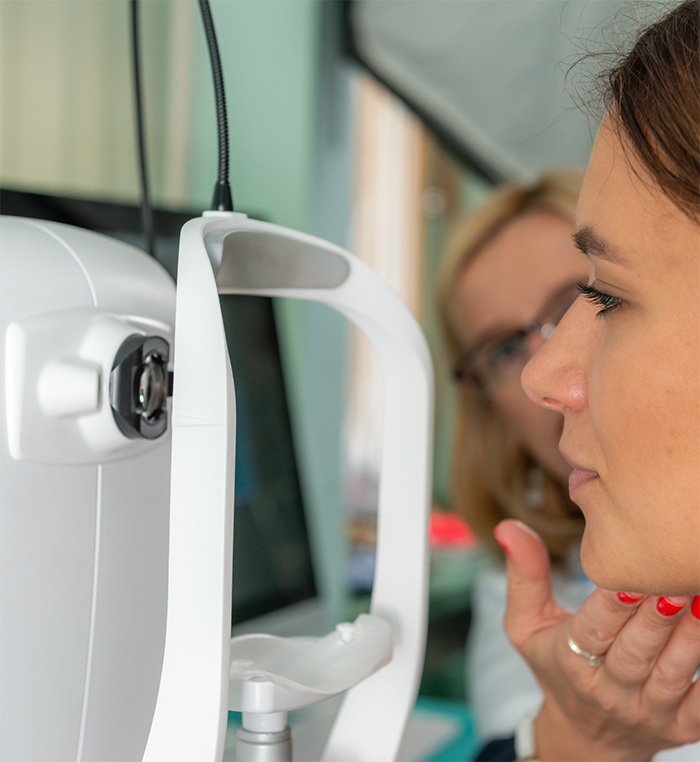
Dr. Carpenter wants the best for his patients—excellent vision and outstanding health. One of the ways he’s able to deliver on this promise is by using the latest, most advanced diagnostic technology available, like our Optos ultra-widefield retinal imaging and OCT (or Optical Coherence Tomography). We invite you to learn a little more about why this technology matters so much below, and feel free to ask us any questions when you see us in person!
How Does Advanced Retinal Imaging Work?
OCT and Optos ultra-widefield retinal imaging is especially helpful for patients who have a history of eye diseases and genetic conditions in their family, such as glaucoma, cataracts, macular degeneration, and more.
Dr. Carpenter uses this technology to view more of your retina in addition to dilation (when it’s clinically necessary). This technology allows us to deliver a more comfortable, non-invasive experience for patients, all while being able to better detect eye diseases for timely treatment.
Why Patients (And Eyes) Love Optos Retinal Imaging
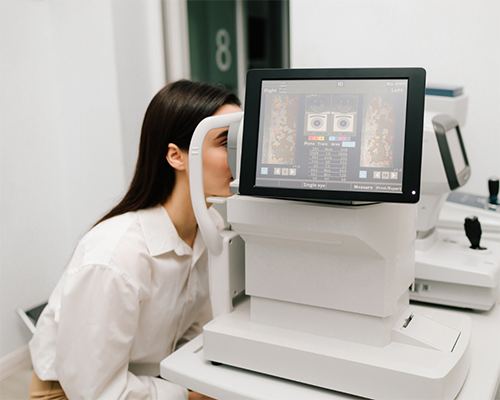
This state-of-the-art imaging system allows Dr. Carpenter to view 80% of the retina in a single image, versus the traditional 10-15% of the retina in traditional diagnostic imaging. This means we are able to better track changes in the retina over time, as well as provide us with valuable information without dilation in many routine situations. The best part is the process is quick and comfortable—after a simple flash of light, you’ll be done. No drops, puff of air, or pressure.
Optical Coherence Tomography (OCT)
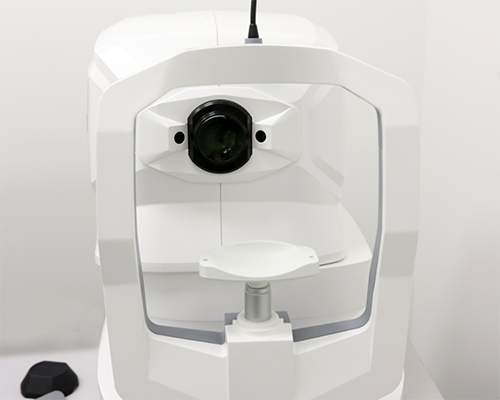
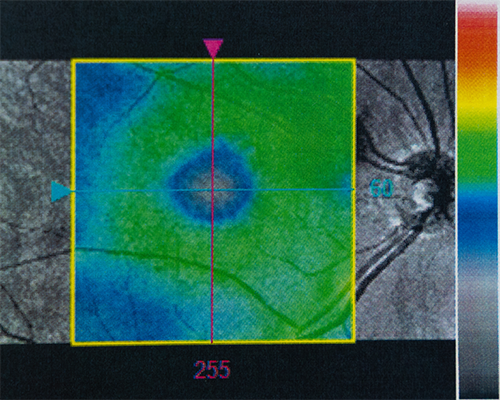
OCT is often recommended if Dr. Carpenter is concerned about your risk of eye disease for a better view of the eye. It’s a non-invasive technology that uses light to capture cross-sectional images of the back of your eye. These cross-sectional images show Dr. Carpenter many different (and important) parts of the eye in high resolution, allowing him to view the thickness and health of the retina, optic nerve, cornea, and other important structures.
OCT can aid in the detection of eye diseases such as glaucoma, macular degeneration, and more. By having an OCT scan taken each year at your comprehensive eye exam, our team can track changes over time and spot warning signs as early as possible for successful, timely treatment.